

How To Download Programs On Rasberry Pi How To Download Programs On Rasberry Pi
Finding good apps that piece of work on Raspberry Pi is important if y'all plan on using information technology every bit a replacement for your desktop computer.
I used my Raspberry Pi as a desktop PC for two days prior to writing this article.
This commodity explains which apps I found useful when replacing your main figurer with a Raspberry Pi.
| Category | Best application |
|---|---|
| Email customer | Thunderbird |
| Graphics | MyPaint |
| Development | Visual Studio Lawmaking |
| Spider web browser | Vivaldi |
| Function | LibreOffice |
| Console | Terminator |
| Printers management | CUPS |
| Movies | VLC |
| Music | QMMP |
| Instant messaging | Empathy |
This list was created according to my needs afterwards two days of using a Raspberry Pi every bit a desktop computer.
You might know some of these apps already, but I'll introduce each with a picture and a curt clarification explaining why you need it on your Raspberry Pi
I have written a consummate tutorial on how to install new apps on Raspberry Pi, feel complimentary to read information technology first, especially if the apps you are interested in aren't available with traditional methods.
If you need help getting started on Raspberry Pi, I accept an entire class to guide you lot through your outset steps. I'll assistance you use the perfect hardware, plug everything in and install your first organisation. You'll also do your first projection with me, just to make sure you are set up for the next level. Get all the data on this page if you lot are interested.
Synaptic
Download the Pi Glossary!
If you are lost in all these new words and abbreviations, request my costless Raspberry Pi glossary hither (PDF format)!
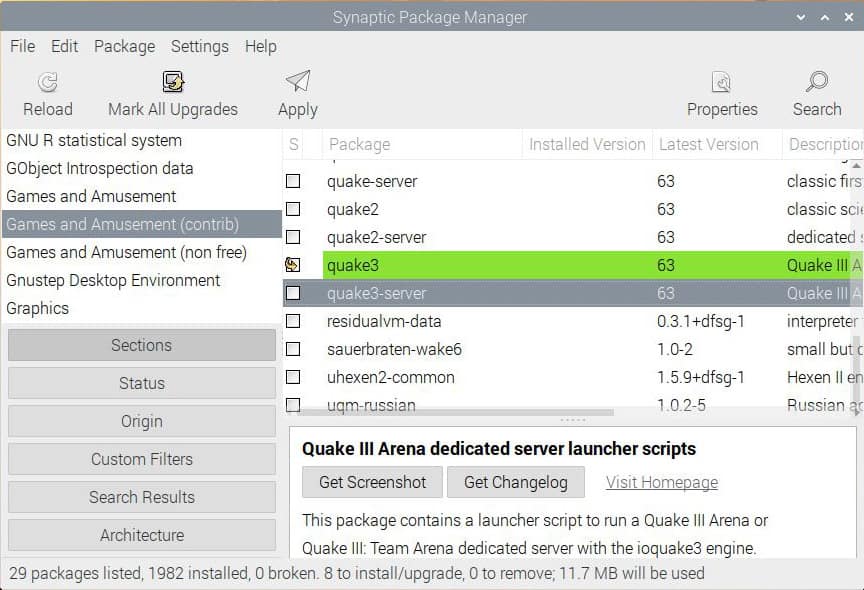
Synaptic is the Debian packet manager. It will aid yous find and install new software on your Raspberry Pi.
It's equivalent to the default "Add/Remove Software" with more features.
You can see all Raspberry Pi Os packages on one page, browse past categories or search for specific words.
And mainly yous'll become all menus on the summit bar, a thing that we don't accept on the default software.
It allows you lot to add repositories, customize the tool, or to apply a script to download packages automatically from a previous installation.
If you lot always use the apt-get command to manage your packages, you don't demand this tool. Yet, for desktop usage of the Raspberry Pi I volition give you mainly graphical software.
Before installing any apps, brand sure you are using a fast SD card with enough space to keep everything. I don't know about you, merely I hate having to beginning all over again considering I didn't cull my materials. If you are not sure if your SD card is skillful enough, y'all can check my benchmark of the best SD cards hither. I have compared them all, and I give you the all-time recommendation.
XFCE4
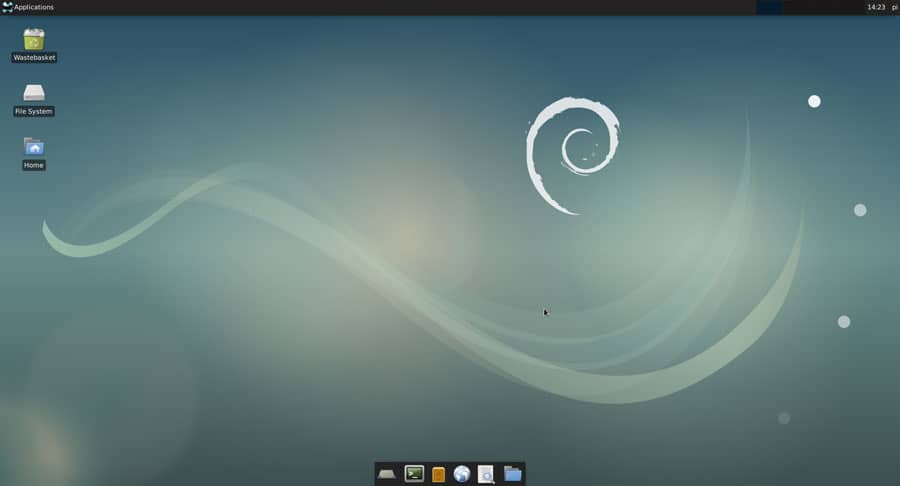
The erstwhile-schoolhouse default desktop surroundings was not for me.
If I take to use the Raspberry Pi as my computer, I'll install a better interface.
I take called XFCE4, just depending on your needs, other possibilities exist.
I call back XFCE4 is a good balance between performances and design, so I showtime with this one.
You'll get the applications carte on the top left (I like that) and a dock with the main shortcuts at the bottom of the screen (you lot can customize it as you want).
The installation process is non natural, so I'll give yous all the steps:
- Firstly, you demand to install xfce4 and xfce4-all packages.
You can use your packages manager to do this (synaptic or the default one), but hither is the apt command to do the same:
sudo apt install xfce4 - So yous take to set XFCE equally the default desktop environment.
Open up a terminal and type this command:
sudo update-alternatives --config 10-session-manager
You'll get a upshot like this:
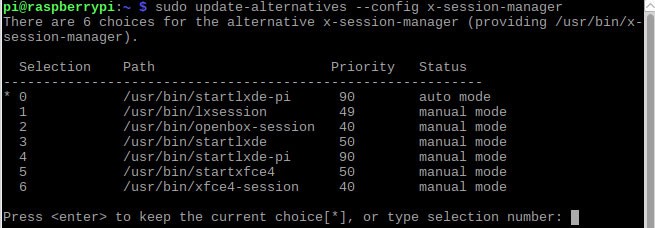
- If you get the aforementioned, enter the xfce4-session ID (6 in my case).
This command will set XFCE as the default desktop environment on the side by side boot.
You can use this tool again to come up back to LXDE as default if you don't similar XFCE. - Reboot your Raspberry Pi and requite a try.
It'll commencement directly on XFCE4. - Check that everything is fine.
On my screenshot I accept changed default colors, y'all tin can do this in the Applications menu > Settings > Advent. - If you want to stay on this desktop surroundings, you tin uninstall the default one to gratis space on your SD card if needed:
sudo apt remove lxappearance lxde lxde-* lxinput lxmenu-data lxpanel lxpolkit lxrandr lxsession* lxsession lxshortcut lxtask lxterminal sudo apt-go install pistore
sudo apt autoremove
sudo apt autoclean
sudo reboot
If you lot adopt another desktop environment, accept in mind that the Raspberry Pi is not a powerful computer.
As we'll see in determination, you may accept performances issue, so choose what yous desire, merely adopt a light environs.
Anyhow, you lot can check my tutorial here on how to install whatsoever desktop surround on Raspberry Pi if y'all desire to effort other ones.
Guake Terminal
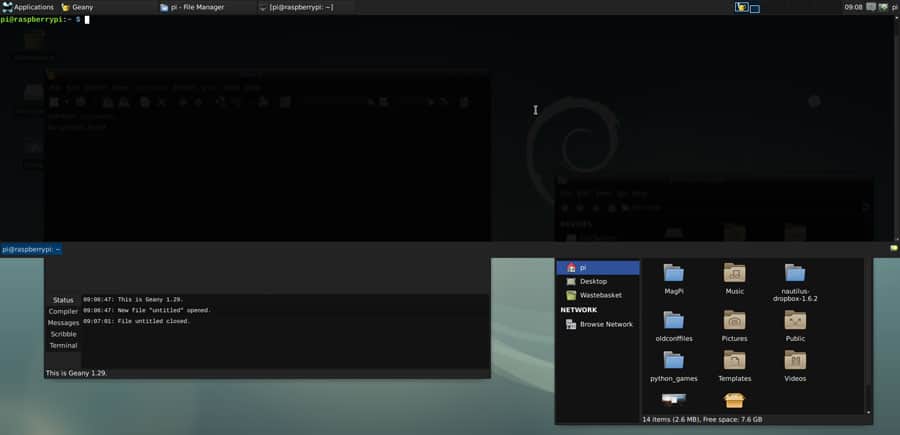
Guake is a terminal that works like whatsoever final.
But you tin can telephone call it with a key, and hit hide with the aforementioned key.
So if you hit F12 the drop-downwards final comes in the foreground, if yous hitting F12 again the terminal disappears (only keeps running).
It's okay to let something run behind, like an error log brandish of real-time information.
I often use this to display htop in Guake (process list and system load).
Every time I had boring operation, I just hit F12, and hop, htop appeared (Don't know what htop is? Check my control cheat sheet hither).
This tool is particularly useful on a Raspberry Pi when you don't always have a good mouse.
Usually, I have a good Bluetooth keyboard (see my recommended products folio), merely information technology's a tactile mouse on information technology, which is not the all-time to scan the menu and discover the terminal.
And then Guake helps me a lot with this.
I didn't say information technology, but you have to starting time it first in the Applications card > Accessories > Guake terminal.
Guake will run in the background until you call it with F12.
You can also click on the system tray icon to open it.
Terminator
Download the Pi Glossary!
If you are lost in all these new words and abbreviations, request my free Raspberry Pi glossary here (PDF format)!
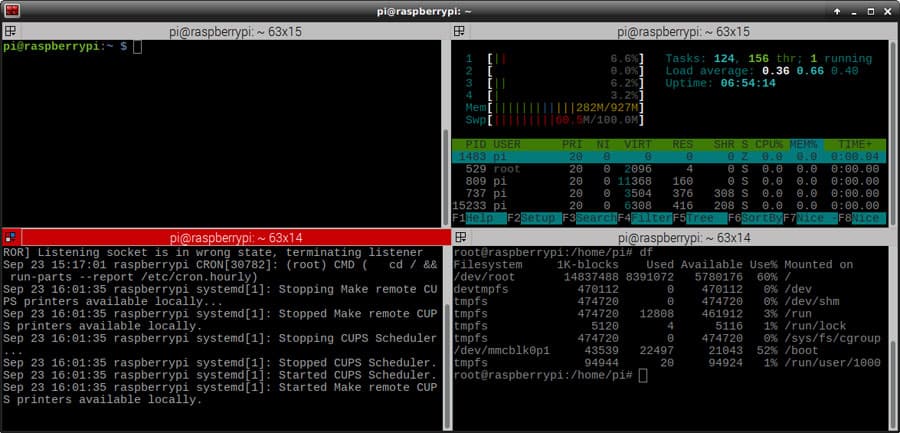
Terminator is a multiple terminals manager that allows you lot to add and shut terminals in a grid.
Guake is practiced for one command running behind, but Terminator is useful during agile work.
For instance, if you install WordPress on your Raspberry Pi (or wherever), yous can accept a window displaying logs, ane in the Apache folder for the configuration and another in the world wide web binder for WordPress configuration.
Rather than switch seamlessly between windows, Terminator allows you to display them all simultaneously.
You can dissever windows, close them or add a new one. You lot tin can also resize any windows.
Simultaneous typing is besides possible, as well as grid export.
It's a great tool on Linux. I oft use it for complicated things.
If you lot master the commands that whatever Raspberry Pi users should know (bank check my shortlist here), y'all'll dearest this tool.
Vivaldi
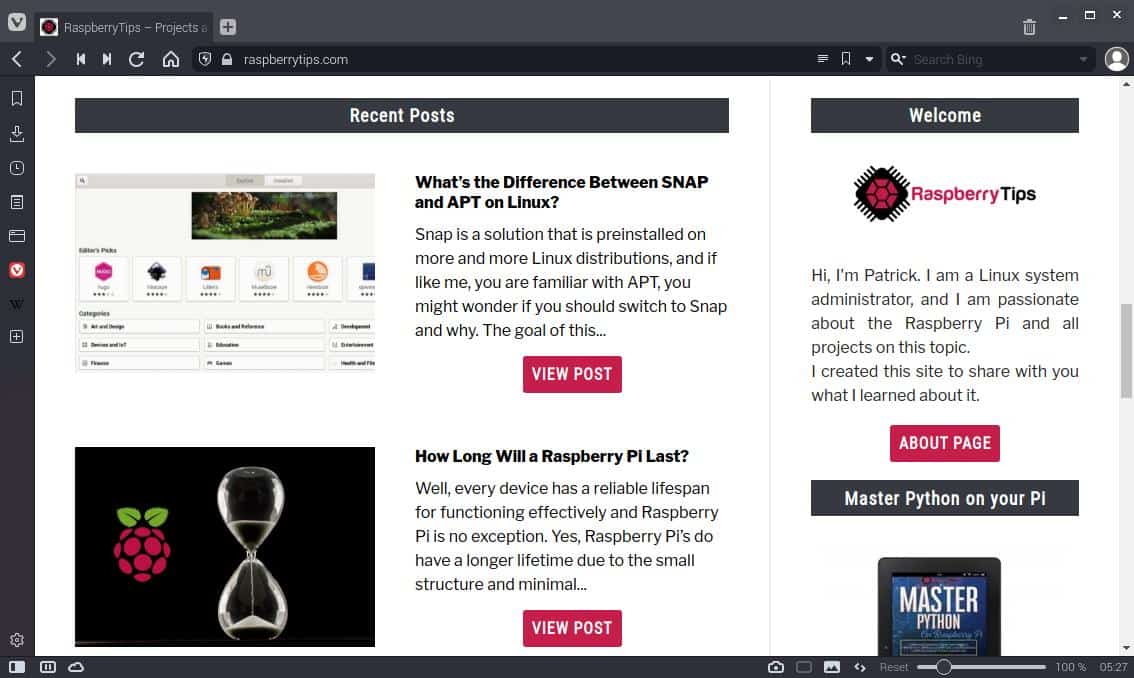
Vivaldi is a good web browser, fully compatible with your Raspberry Pi.
I'll introduce this ane because you probably already know the alternatives: Chromium and Firefox.
This browser is developed by Vivaldi Technologies, a visitor created by the former CEO and co-founder of Opera.
So if y'all are familiar with the Opera browser, you'll not be lost with Vivaldi, they take kept the favorite features from Opera.
Ok, but why should I install Vivaldi rather than Chromium or Firefox?
Information technology's a expert question. I can't make this choice.
Information technology will depend on your needs and habits.
On my first exam, Vivaldi seemed quicker than Chromium or Firefox, and then I used it for a few hours.
But in the end, I re-compared everything, and it wasn't so obvious.
Anyway, I think you can employ the browser y'all want. They all accept like features.
And most of the fourth dimension, I call up you will keep the one that you usually utilize.
If I had used the Raspberry Pi as my computer longer, I would have taken the browser that I have all my preferences saved in the cloud (bookmarks, extensions, passwords, …).
Note: To install it on your Raspberry Pi, you lot can get the parcel here (choose Linux ARM 32 $.25).
If you really want the "best" web browser for you, you should read this commodity, where I compare all of them. I tested them all and share with you my recommendation. There is no perfect solution for anyone, it depends on what you need.
Thunderbird
Raspad 3
Learn & program in Mins
A tablet that gives yous access to all the Raspberry Pi ports y'all need, with a unproblematic interface to start programming hands.
Buy now Cheque my review
I'thousand not a big fan of email clients.
I unremarkably prefer webmail like Gmail or Outlook.com.
Only if y'all desire to use your Raspberry Pi as your desktop PC, you may demand one.
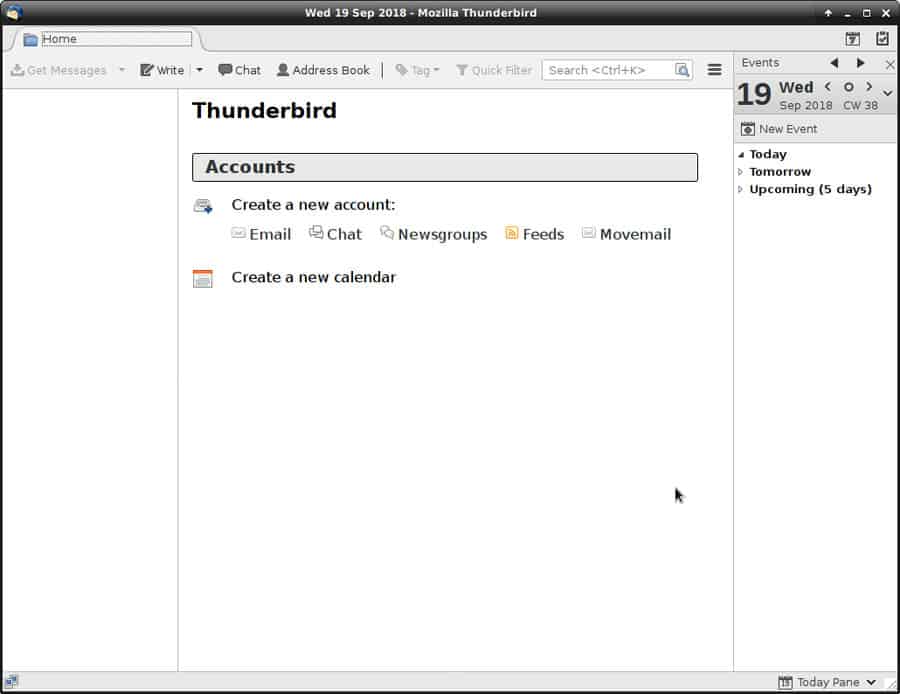
Thunderbird is one of the best email clients on Linux and is bachelor on Raspberry Pi Bone.
You can utilize it with whatever email provider (Pop/IMAP) and besides manage other feeds on it like RSS or newsgroups.
By default, in that location is an integrated agenda, and you tin can add many extensions that are downloadable on this website.
Don't forget that yous work on an SD card, so if you lot have an business relationship with 30G of emails, you'll quickly run out of space.
Endeavor to use IMAP if possible and sync only the most essential folders on your Raspberry Pi.
By the way, a Raspberry Pi can likewise host your email server, cheque my tutorial here if you are interested in this project.
Empathy
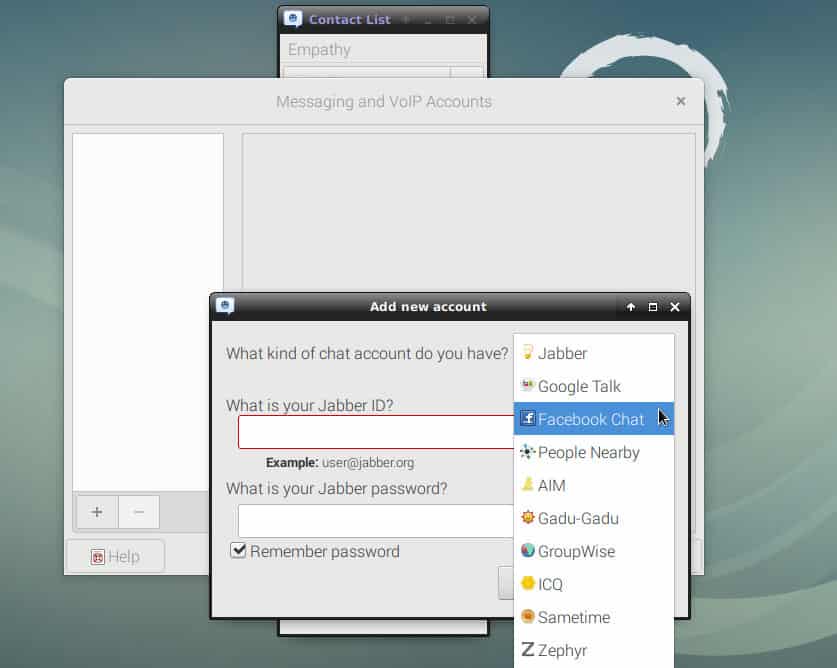
Empathy is a chat client for the principal chat services on the web (Facebook, Google, Jabber, …).
It'south a tool similar to Pidgin, Trillian, or Franz Messenger.
You add every account you desire on your usual services and can chat with anybody in the same software.
I like Empathy because it'south a low-cal app and well-integrated with Raspberry Pi OS.
Appearance and notifications are fine, whatever your desktop environment.
If you lot utilize services non listed in the default Empathy selection, try to search the customs for additional plugins.
Or perchance you can use another software similar Pidgin.
For video conferences, yous tin also install Zoom on Raspberry Pi. I explain everything in this post.
Filezilla
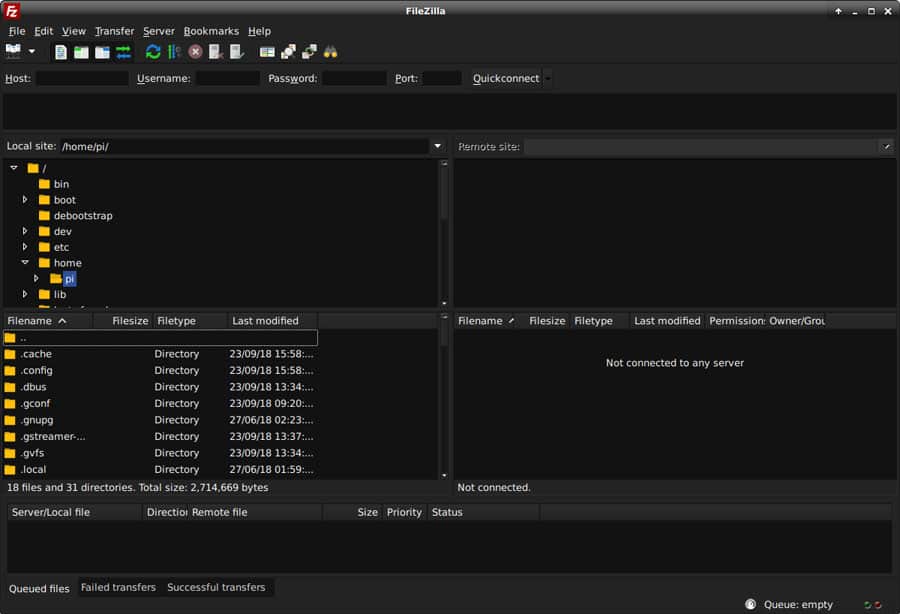
Filezilla is a well-known FTP client, only that'southward non all
Equally with any file transfer customer, you'll have a source repository on the left (you mostly), and the destination server on the right (some other calculator or server in your network, or on the Internet).
You can manage connections in the site manager.
And so you can transfer files with a drag and drop them into the other side.
On the site director, y'all can choose between FTP, SFTP and Storj protocols.
SFTP is particularly useful in Raspberry Pi or Linux environments.
Yous can connect to another Raspberry Pi, or from your computer to the Raspberry Pi with FileZilla.
That's how I got all the screenshots of this article :).
In the avant-garde settings, you tin can manage absurd things similar default actions on transfer, concurrent transfers, or speed limits.
Deluge
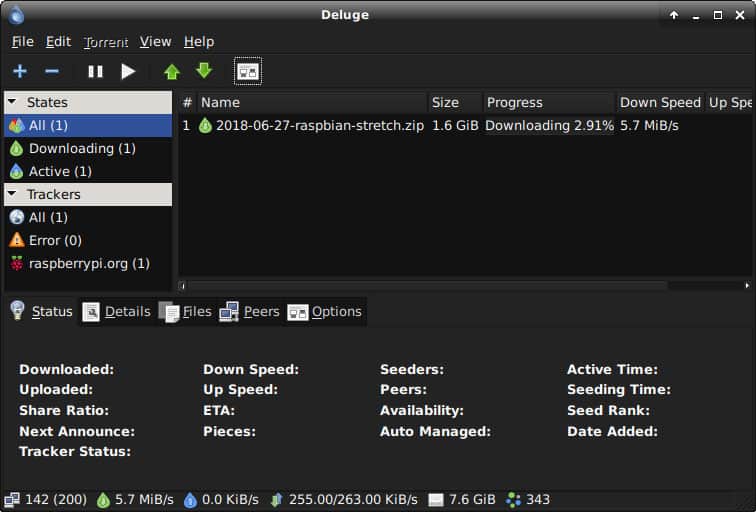
Drench is a tool to download torrents on your Raspberry Pi.
Torrent is a protocol to download files.
Information technology's not illegal if yous download files legally.
For example, Raspberry Pi Os images are available for torrent download, and oftentimes information technology's faster than HTTP download.
I like Drench considering information technology's a simple app at commencement expect, just with many hidden options.
And then for beginners, just grab your .torrent file and open up it in Deluge. The download volition starting time. Done.
For others, you'll find a ton of features in the app menu, like a web interface or a console director.
Deluge and Raspberry are an exciting couple.
If you have many files to download (or large files), you tin can manage this with your Raspberry Pi, stop your usual computer, get to sleep and go all files downloaded in the forenoon.
This way y'all'll save energy. And the web interface will exist great for that.
VLC
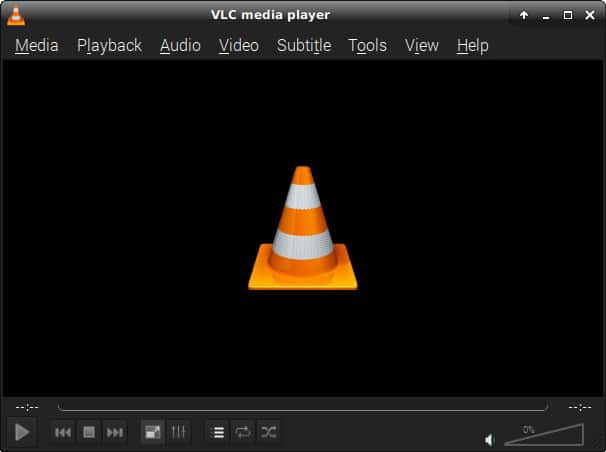
I think that everyone knows VLC, just I have to put it on this list.
VLC is an open-source media player, available on most platforms, including Raspberry Pi.
Take a media file (.mkv, .avi, .mp3/iv, …) and open up information technology with VLC.
Most of the time it'll work, no codecs issues as it can read almost anything.
Then, it's a classic media role player, with all needed options, I don't take much to add.
If yous are using your Raspberry Pi by and large as a media eye, a better solution like Kodi might be considered. You tin acquire more than virtually Kodi on this page. You can access YouTube, Netflix, and other streaming services by installing a few plugins (list hither).
QMMP
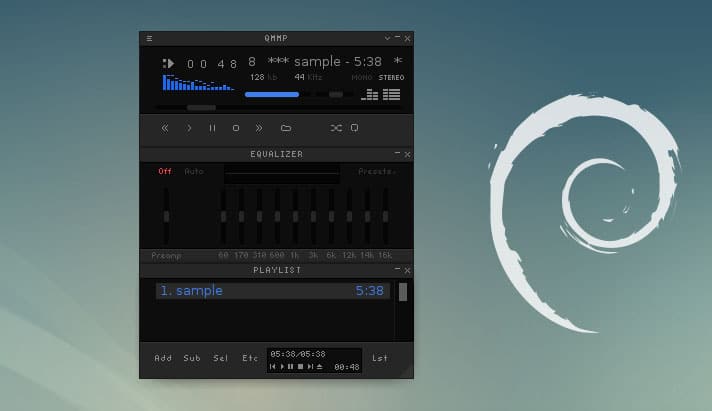
I don't really like all the default music players in any Linux distribution.
I notice that apps like Audacious, Amarok, or Rhythmbox have an erstwhile-schoolhouse await and take a lot of space on the screen.
QMMP does just what we demand: play music, with playlist management and blaster options.
It has a like look to Winamp for those who know.
Y'all can close whatsoever section window if you don't use it.
It's a lightweight app for the Raspberry Pi, which works fine and is bachelor on the default repository.
What more?
If the chief usage of your Raspberry Pi is a music actor, I would recommend taking a wait at these other options I take tested here.
MyPaint
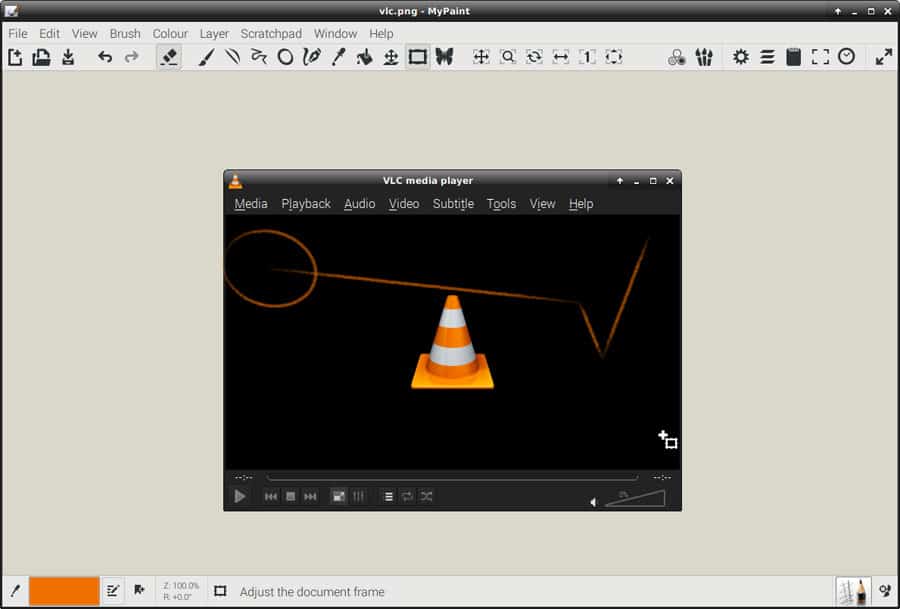
I don't similar GIMP at all.
Generally, I utilize Photoshop (with Windows or Wine) or Krita (on my Ubuntu computer).
I use these tools to brand quick modifications to pictures like adding text, resizing, or cropping.
And with GIMP, every time I tried, I lost a lot of time with its dumb interface :).
So on Linux, I usually install Krita to do this, which is an excellent tool for these kinds of modest edits.
But Krita isn't available on Raspberry Pi OS, and so I take to find another tool.
I institute MyPaint, which seems to exercise what I want.
In a small interface, you'll get all the needed stuff in the main toolbar.
Anyhow, on hardware like the Raspberry Pi, there is no way to install Photoshop or Wine, so you will have to bargain with bones software.
LibreOffice
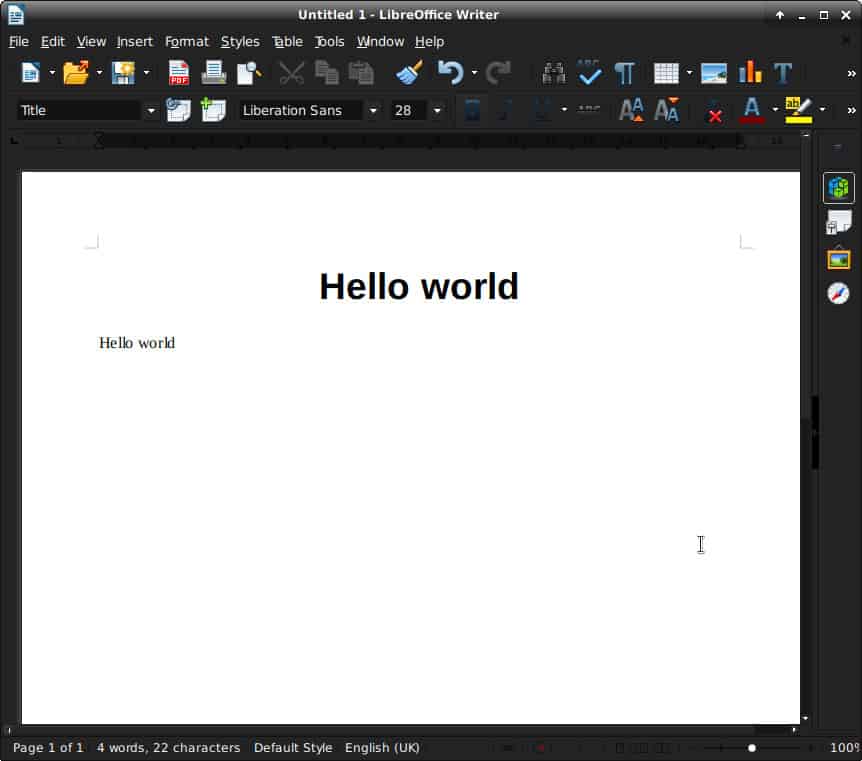
LibreOffice is almost the just decent alternative to Microsoft Role on Linux.
I'yard not familiar with Office 365. If y'all have an business relationship, perhaps you can employ the online version on your Raspberry Pi.
But if you are looking for installed software, LibreOffice will exercise the job.
LibreOffice is an unabridged suite of tools, like the Microsoft ane:
- Microsoft Give-and-take => LibreOffice Author
- Microsoft Excel => LibreOffice Calc
- Microsoft Powerpoint => LibreOffice Print
The interface changes a scrap, but globally you should apace find the principal tools on LibreOffice.
Past default, new files are saved into an OpenDocument format, with a .odt or .ods extension for example.
But you can choose to save it equally .doc or .xls to keep compatibility with some other estimator if needed (you tin can as well install LibreOffice on whatever other computer if you desire).
Zim
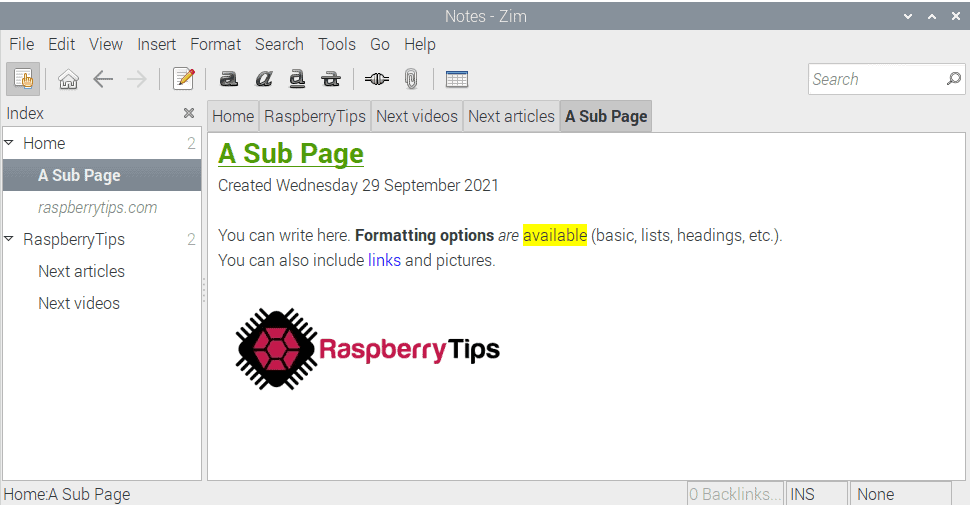
I used to recommend CherryTree to take notes with a desktop app, just information technology's more complicated to install it (it's no longer available in the repository) and Zim is now a not bad option.
Obviously, it's just useful if you lot want to avoid using online tools similar OneNote, Evernote, Google Keep, or other alternatives. I tend to prefer them as it'due south all synced with my other computers, phone, and tablet. But it's your pick, I understand that you lot might prefer to keep your data away from these behemothic companies :).
Anyhow, Zim does an impressive task at this, you tin can create unlimited pages and subpages, all the formatting is available every bit with other like tools. The just thing I haven't found is how to resize images, perhaps it's possible, if not, you may take to employ a tool like "MyPaint" commencement.
HomeBank
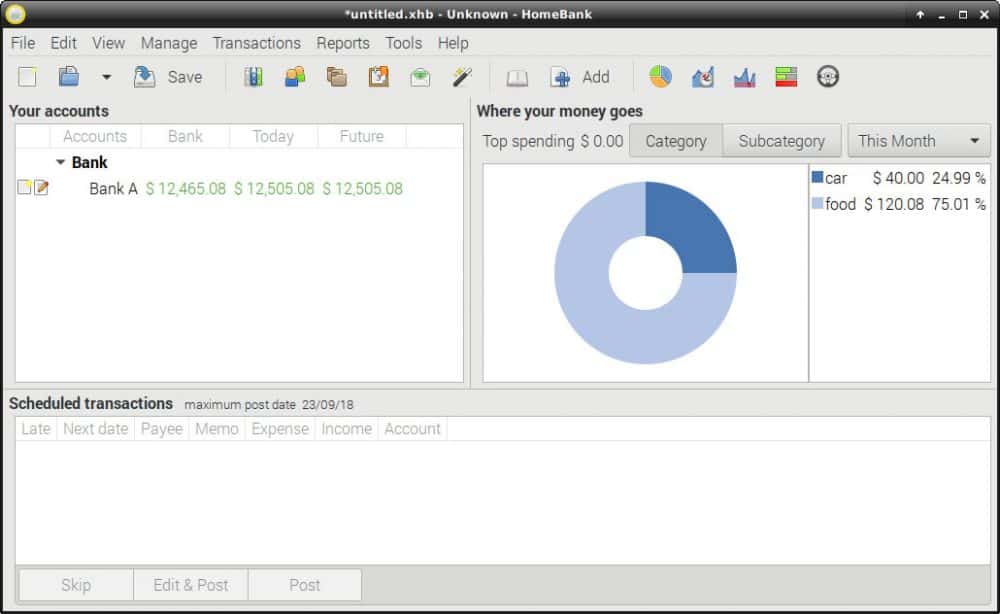
And the last Microsoft Role tool alternative we don't run into is Money.
Homebank is a calorie-free tool to manage your bank accounts.
I didn't use it a ton over two days, just information technology seemed to work fine.
This tool allows yous to analyze your personal finance and upkeep, with a nice interface, including charts.
About of the time it's possible to export data from your banking company interface and upload it into HomeBank.
Then yous can categorize each transaction, add notes, brand your bank reconciliation, etc.
Your data is easy to export, so it won't be lost.
You lot can re-import it into any tool of this kind (like GnuCash for example).
HomeBank is also available on Windows, and so fifty-fifty if you modify your operating organisation you lot can continue this app.
CUPS
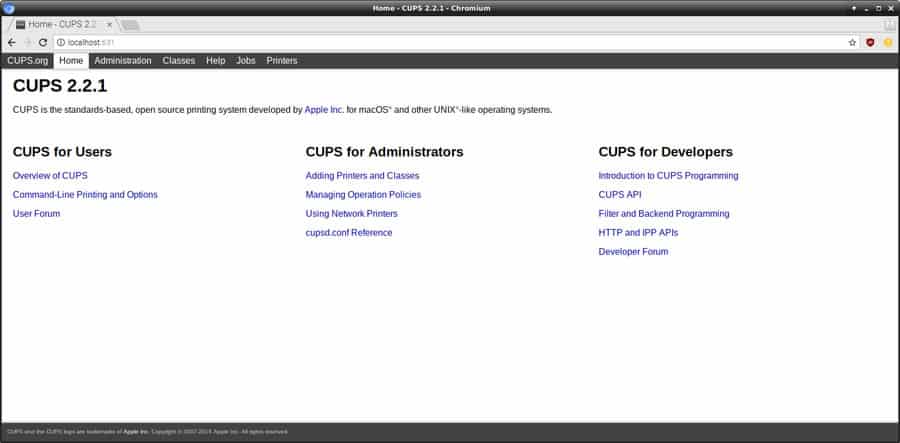
Printing stuff on Linux has always been complicated, but this tool tin help you 🙂
CUPS is a web interface to manage printers.
You tin add a printer on the network or a USB plug.
A list of drivers is already built-in and you can add together more if needed.
This app will allow you lot to install a new printer with a few steps on a web interface rather than using a non-intuitive interface or using obscure commands.
You'll even be able to share your printers on your network, even if it'southward an sometime dumb printer without a network port.
Once cups is installed, go to http://localhost:631 to employ the interface.
The default login is pi and the password is the same equally your electric current system password.
All the configuration is in /etc/cups/cupsd.conf if you need to change something.
If you want to larn more than about CUPS, I have a detailed tutorial bachelor here.
Microsoft Visual Studio Code

Yeah, it's Microsoft, but it's still a good tool :).
I oftentimes practise code for work or projects at dwelling, and recently I switched from Sublime Text to VS Code for both.
Information technology's free, with virtually of the same features as Sublime Text and the ability to add together plugins to do everything (direct Git or SVN management, PHP autocomplete with functions parameters tooltip, …).
The Raspberry Pi great for programming, and if y'all only need bones features, Geany is already installed by default and will exercise the job.
I used it at piece of work for over a year without problems, so it must be enough for habitation projects :).
And then, I needed to install Visual Studio Code on my Raspberry Pi during my ii-twenty-four hours test to utilize it as my master desktop PC.
It'due south possible, but you demand to build it from source, so I'll requite you the stride-by-step procedure here
Visual Studio Code is now bachelor directly in the "Recommended Software" tool. You lot can install it easily at present, no need to install it from sources or a random GitHub project.
After the installation, you lot'll find the shortcut in the chief menu, nether "Programming".
Visual Studio Lawmaking is not the only option. You lot can find my top text editors in this article. And I also have dedicated blog posts for PyCharm and Geany if you want to learn a few tips near them.
Need more than?
Maybe these apps were besides obvious to you, here is a video where I introduced 21 other apps that most people don't know!
Reminder: Remember that all the members of my community go access to this website without ads, exclusive courses and much more. Y'all can become part of this community for as piddling as $5 per month & become all the benefits immediately.
Concluding thoughts
Go My Cheat Sail!
Grab your free PDF file with all the commands you need to know on Raspberry Pi!
My two-24-hour interval test using my Raspberry Pi as my primary reckoner concluded with a mixed opinion.
On one hand, I confirmed that it'south possible to use a Raspberry Pi every bit a desktop PC.
On the other manus, everything is very tedious, and overall the Raspberry Pi was merely useful for a single task (even multi-tab browsing was a pain).
So yes, you can give a Raspberry Pi to a kid or someone who doesn't oftentimes need a calculator.
I call up for example for parents or grandparents. If they check their emails once or twice a week, they don't need a $500 figurer to do this, a Raspberry Pi tin can be useful and relieve money.
Also, they unremarkably don't have the habit of more powerful computers, then "slowness" will not be a problem for them.
But for me, I'one thousand pleased to go back to my latest generation pc!
I hope this mail will aid you to become an honest review of the Raspberry Pi and some ideas for apps to use on it.
By the way, Raspberry Pi Imager is as well a smashing app you can install on your Raspberry Pi, specially if you don't have a figurer (click the link to read my tutorial well-nigh information technology).
- Can a Raspberry Pi 4 really Replace your Desktop PC? (I Tried)
- How to Easily Create Desktop Shortcuts on Raspberry Pi Os?
- How to change desktop appearance on Raspberry Pi?
Feel free to comment if you lot know other practiced apps you want to share with us
Raspberry Pi Resources
Not sure where to starting time?
Understand everything nearly the Raspberry Pi, stop searching for help all the fourth dimension, and finally relish completing your projects.
Watch the Raspberry Pi Bootcamp grade now.
Principal your Raspberry Pi in 30 days
Don't want the basic stuff only? If yous are looking for the all-time tips to become an expert on Raspberry Pi, this volume is for y'all. Acquire useful Linux skills and practice multiple projects with footstep-past-footstep guides.
Download the e-book.
VIP Customs
If you but desire to hang out with me and other Raspberry Pi fans, you tin also join the customs. I share sectional tutorials and behind-the-scenes content at that place. Premium members tin can too visit the website without ads.
More details here.
Need help building something with Python?
Create, sympathise and improve whatever Python script for your Raspberry Pi.
Learn the essentials, step-by-step, without losing fourth dimension understanding useless concepts.
Get the eastward-volume now.
You can also detect all my recommendations for tools and hardware on this folio.

How To Download Programs On Rasberry Pi How To Download Programs On Rasberry Pi,
Source: https://raspberrytips.com/best-apps-raspberry-pi/
Posted by: roriefignan.blogspot.com
0 Response to "How To Download Programs On Rasberry Pi How To Download Programs On Rasberry Pi"
Post a Comment